
Full text of the Turkestan Declaration of May 15 2026
TURKESTAN DECLARATION OF THE INFORMAL SUMMIT OF THE ORGANIZATION OF TURKIC STATES
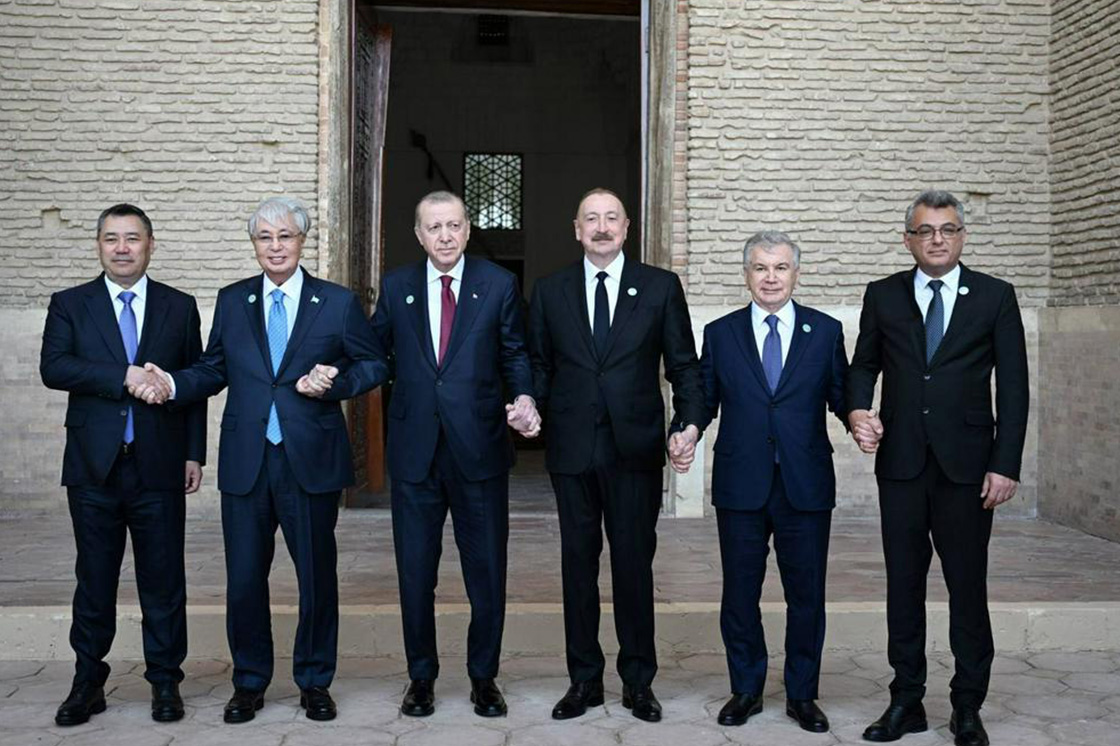
The informal summit of the heads of state of the Organization of Turkic States (hereinafter referred to as OTS), convened at the initiative of the Republic of Kazakhstan, was held in Turkestan, the “Spiritual Capital of the Turkic World,” on May 15, 2026, under the motto “Artificial Intelligence and Digital Development.” The summit was chaired by His Excellency Kassym-Jomart Tokayev, President of the Republic of Kazakhstan, with the participation of His Excellency Ilham Aliyev, President of the Republic of Azerbaijan, His Excellency Sadyr Japarov, President of the Kyrgyz Republic, His Excellency Recep Tayyip Erdoğan, President of the Republic of Turkey, and His Excellency Shavkat Mirziyoyev, President of the Republic of Uzbekistan. His Excellency Mr. Tufan Erhürman, President of the Turkish Republic of Northern Cyprus, participated as an observer in accordance with the documents of the Council of Heads of State, as well as His Excellency Mr. Kubanychbek Omuraliev, Secretary General of the Joint Territorial Community.
Heads of State of the Organization of Turkic States (OTG),
emphasizing the significant contribution of the Turkic peoples to world civilization and the growing role of the Turkic states in shaping the digital future of the global economy thanks to their common history, language, culture, traditions and values;
reaffirming their continued commitment to the principles, goals and spirit of the historic Nakhchivan Agreement, the Doctrine “Turkic World – Vision 2040”, the Charter of the Turkic World, the Astana Act and the Strategy of the United Territories of the Turkic Community for 2022-2026, which emphasize the importance of developing cooperation in the field of advanced technologies, innovation and digital transformation;
Noting with approval the successful holding of the Gabala Summit on 7 October 2025 under the motto “Regional Peace and Security”;
expressing support for the current chairmanship of the Republic of Azerbaijan and the priorities outlined for its period, as well as confidence that Azerbaijan’s chairmanship will contribute to the further strengthening of the Organization as an effective platform for cooperation among Member States;
Congratulating the Republic of Turkey on the initiative and successful holding of the informal meetings of the Council of Foreign Ministers of the JTG, held in Istanbul on 7 March 2026 and on the margins of the 5th Antalya Diplomatic Forum on 18 April 2026; welcoming the outcomes of these meetings, and also emphasizing the importance of continuing such meetings on a more regular basis, as noted in the Gabala Declaration;
Welcoming the adoption of the New Constitution of the Republic of Kazakhstan, which enshrines norms for the protection of citizens’ rights in the digital environment, reflecting Kazakhstan’s commitment to responding to the modern challenges of the digital age and creating a sustainable legal basis for future development;
Noting the adoption of the Constitutional Law on the special status of the city of Alatau, which granted it the status of an advanced development area with a special legal and financial regime, as a significant contribution to supporting innovation, investment and the country’s digital transformation agenda;
Welcoming the declaration of 2026 as the Year of Digitalization and Artificial Intelligence in Kazakhstan; noting with approval the successful holding of the Digital Qazaqstan Forum, held in Shymkent on 27 March 2026, as an important platform for advancing the digital development agenda of Kazakhstan;
also commending the signing of the Digital Economy Partnership Agreement (DEPA), the Memorandum of Understanding on the development of the “Great Language Model of Turkic Languages” and the ongoing implementation of the “Digital Silk Road” project, which together contribute to strengthening technological cooperation and digital connectivity in the Turkic world;
Noting with approval the successful holding of the World Telecommunication Development Conference (WTDC-25) of the International Telecommunication Union in Baku on 17–28 November 2025, as an important contribution to advancing global digital transformation, strengthening international cooperation and promoting inclusive and sustainable digital development;
Recognizing the historical and spiritual significance of the city of Turkestan, the “Spiritual Capital of the Turkic World”, as a symbol of the unity and aspirations of the Turkic peoples for the future, as well as its role in hosting this informal summit dedicated to harnessing the transformative potential of artificial intelligence and digital development for the prosperity and competitiveness of the Turkic world;
emphasizing that artificial intelligence and digital technologies are strategic drivers of economic integration, sustainable development, innovation, improvement of public services and preservation of Turkic cultural heritage, while requiring coordinated action to address issues of ethical governance, cybersecurity and data protection;
noting the need to strengthen multilateral cooperation between the Turkic states to create sustainable digital ecosystems, promote human-centric and ethical AI, develop common infrastructure and strengthen human capital in accordance with best international practices and in the spirit of Turkic solidarity;
Reaffirming its support for the global initiative of the Kyrgyz Republic to host the VI World Nomad Games from 31 August to 6 September 2026 and calling on Member States and observers to actively participate in this important international event, as well as to promote digital tools for the preservation, presentation and promotion of the cultural heritage and traditional sports of the Turkic peoples worldwide;
Welcoming the opening of the Centre for Islamic Civilization in Tashkent and emphasizing its role as a modern platform for the use of artificial intelligence, interactive technologies and digital solutions in the preservation, study and popularization of the scientific and cultural heritage of the Islamic world, as well as in the promotion of innovation, education and knowledge exchange;
stated that they:
1. Reaffirm the strategic priority of artificial intelligence and digital development for the Turkic world and commit to deepening comprehensive multilateral cooperation in these areas within the framework of the ATC to stimulate innovation, economic growth and inclusive prosperity.
2. Support the development of digital platforms designed to simplify services for investors, provide reliable data and increase the visibility of regional investment opportunities.
3. Welcome the proposals put forward by His Excellency Mr. Kassym-Jomart Tokayev, President of the Republic of Kazakhstan, at the Gabala Summit in the Republic of Azerbaijan regarding the establishment of a “Center for Digital Innovation of the ATC” and a “Cybersecurity Council”; instruct the relevant competent authorities of the Member States, in coordination with the ATC Secretariat, to further develop these initiatives and possible formats for cooperation.
4. Take note of the initiative to develop a comprehensive “Roadmap for projects in the field of artificial intelligence and the creative economy” within the amalgamated territorial communities, aimed at stimulating innovation, promoting digital entrepreneurship, and expanding cooperation in the field of advanced technologies.
5. Emphasize the importance of adopting the “Digital Turkic World” Concept as a comprehensive framework for promoting digital integration, innovative ecosystems, data-driven interaction, and practical cooperation in the field of artificial intelligence and advanced technologies in the amalgamated territorial communities.
6. Welcome the entry into force of the Digital Codes of the Kyrgyz Republic and the Republic of Kazakhstan in 2026, the adoption of the Strategy for the Development of Artificial Intelligence Technologies until 2030 in the Republic of Uzbekistan, the adoption of the Artificial Intelligence Strategy of the Republic of Azerbaijan for 2025–2028 and the approval of the Action Plan to Accelerate Digital Development in the Republic of Azerbaijan for 2026–2028, as well as Turkey’s efforts to develop a new vision for artificial intelligence for the period after 2026 with the broad participation of stakeholders and the establishment of the Cyber Security Presidency under the President of the Republic of Turkey, considering all this as a significant contribution to advancing the digital transformation of the ATG Member States and improving their digital regulation.
7. Note with approval the establishment of the Artificial Intelligence Center and the Academy of Artificial Intelligence, as well as the high-performance computing infrastructure in the Republic of Azerbaijan.
8. Support the further development and implementation of the “Great Language Model of Turkic Languages” and related artificial intelligence tools, initiated by the Republic of Turkey, with the aim of promoting intercultural communication, preserving and enriching Turkic languages, increasing the effectiveness of educational platforms, improving healthcare technologies and developing economic integration.
9. Highly appreciate the implementation of the first AI-based legal awareness platform, as well as the development of the first national large language model in the Republic of Azerbaijan.
10. Encourage the promotion of the Digital Silk Road project and similar digital infrastructure projects, including high-speed connectivity, high-performance computing, data centers, cloud infrastructure and next-generation networks, to strengthen interoperability and regional digital connectivity.
11. Welcome the signing of the Memorandum of Understanding between the ministries responsible for transport of the UTG member states on the implementation of the e-CMR system on 23 April 2026 in Bishkek, and call on the relevant authorities of the member states to complete their consideration of the draft Agreement on the Mutual Recognition of Electronic Digital Signatures between the member states of the Organization of Turkic States, initiated by the Kyrgyz side and aimed at developing cross-border electronic document management and strengthening trust in digital services.
12. Welcome the full launch of the e-Permit system and support the integration of national single window systems, including e-Permit, e-CMR and the e-government systems of the Member States, to simplify cross-border document flow, reduce administrative barriers, ensure real-time cargo tracking and improve the efficiency and transparency of cargo transportation along the Trans-Caspian East-West International Transport Route (Middle Corridor).
13. Emphasize the importance of further implementing the eTIR procedure, as provided for in Annex 11 to the Customs Convention on the International Transport of Goods under Cover of TIR Carnets (TIR Convention), 1975, to facilitate international freight transport and confirm their readiness to complete the necessary technical and legal work as soon as possible.
14. Encourage the establishment of a Unified Support System that would enable direct coordination between competent authorities, border services and transport operators of Member States to promptly resolve problems related to freight transport, including non-standard situations, document discrepancies and freight delays.
15. Welcome the proposals put forward by His Excellency Mr. Shavkat Mirziyoyev, President of the Republic of Uzbekistan, at the Gabala Summit in the Republic of Azerbaijan regarding the implementation of the Turkic Green Corridors digital system and the establishment of a Green Transformation Consortium; instruct the relevant competent authorities of the Member States, in coordination with the Secretariat of the Joint Territorial Community, to further develop these initiatives and possible formats for cooperation.
16. Call for enhanced cooperation in the area of human capital development through joint programmes on digital literacy, AI education, skills development and talent mobility, with a particular focus on youth, women and STEM fields, including regular training platforms, technology and aerospace festivals and exchange programmes.
17. Welcome the proposal of Uzbekistan to hold the “Days of Science and Innovation of the Turkic World” in October 2026 in Tashkent and call for the development of joint research support programs to strengthen scientific cooperation and innovation potential in the Turkic world.
18. Emphasize the importance of promoting digital transformation in agriculture in the Turkic states and call for enhanced cooperation to expand the use of digital technologies in the agricultural sector, as envisaged in the Strategic Roadmap for Agricultural Cooperation within the ATC, adopted on June 25, 2025 in Bishkek, with the aim of increasing productivity, sustainability and ensuring food security in the Turkic world.
19. Recognize the growing importance of cooperation in the field of space activities and define it as one of the priority areas of interaction between the JTG member states through joint initiatives aimed at strengthening technological partnerships, developing scientific and human resources potential, and deepening cooperation and integration between the JTG member states.
20. Welcome the joint project being implemented within the Joint Territorial Group for the development and ground testing of the CubeSat-12U nanosatellite scientific spacecraft as a practical example of effective multilateral cooperation.
21. Strengthen efforts to harmonize the legal framework of Turkic states in the field of artificial intelligence and digital technologies, including through the Interparliamentary Assembly of Turkic-Speaking Countries (TURKPA).
22. Welcome the initiatives and activities of the Turkic Academy in the field of artificial intelligence and digital development, including the organization of the first International Conference on the Ethics of Artificial Intelligence, held on 28 October 2025 in Baku; the establishment of the Department of Ethics of Artificial Intelligence at Baku State University; the publication of the “Dictionary of Terms of Information Technology and Artificial Intelligence of Turkic Languages”; as well as the ongoing project “National Identity and Broadcasting of Cultural Heritage: Value Atlas of Textbooks of the Countries of the Turkic World Adapted for Artificial Intelligence (AI-Ready)”.
23. Support the efforts of the Turkic Culture and Heritage Fund to continue work on the next editions of the Catalogue of the Tangible and Intangible Cultural Heritage of the Turkic World, as well as on the Anthology of Folklore, the first volumes of which were successfully presented at the 43rd UNESCO General Conference in Samarkand on 3–4 November 2025 and include digitalization elements such as QR codes.
24. Welcome the proclamation of Khiva as the Youth Capital of the Turkic World 2026 and emphasize its role in promoting youth participation in the field of artificial intelligence, digital innovation and in preserving the common cultural and historical heritage of the Turkic peoples.
25. Welcome the creation by the Turkic Culture and Heritage Foundation of the digital platform “Turkic Heritage”, aimed at systematizing information about the Turkic peoples, their history, culture and modern life, as well as the formation of a unified digital space integrating a digital encyclopedia, a multimedia library, educational resources, interactive services and artificial intelligence technologies, including multimedia archives.
26. Commend the ongoing process of establishing the Centre for Digital Solutions for Sustainable Development under the auspices of UNESCAP in Almaty and recognize its importance for strengthening regional cooperation in promoting digital innovation, emphasizing the need for active interaction with the Centre for the exchange and implementation of digital solutions for sustainable development.
27. Welcome the establishment of the International Telecommunication Union (ITU) Regional Acceleration Centre in Azerbaijan on 21 November 2025 and recognize its importance in stimulating digital innovation, supporting start-up ecosystems and promoting digital transformation in Azerbaijan and the wider region, emphasizing that its main objective is to strengthen innovation and entrepreneurship potential, stimulate ecosystem collaboration and accelerate digital transformation in the region and beyond.
28. Recognize the key role of science, technology and innovation in promoting sustainable development and the urgent need to bridge the technology gap between least developed countries and the rest of the world; commend Turkey for its consistent support to the UN Technology Bank for Least Developed Countries and call upon Member States and observers to support and cooperate with this structure.
29. Recognize the strategic importance of sustainable urban and spatial development, including through the use of digital technologies, innovative solutions and data-driven approaches, as well as urban planning, to promote inclusive, resilient and environmentally sound cities and communities; confirm their active interest in participating in the thirteenth session of the World Urban Forum, which will be held in the Republic of Azerbaijan from 17 to 22 May 2026 under the theme “Sheltering the World: Safe and Sustainable Cities and Communities”.
30. Encourage the implementation of AI-based and/or IoT-enabled digital twins as strategic tools for sustainable development, using high-fidelity virtual models to support spatial planning, disaster risk management, climate change adaptation, emission and pollution monitoring, biodiversity conservation, improved resource efficiency, and the resilience of critical urban and agricultural systems in line with the Turkic World Vision 2040 Doctrine.
31. Support the development and implementation of the Digital Agricultural Data Platform of the Amalgamated Territorial Community (AgTC) as a unified mechanism for data exchange, the implementation of smart agriculture solutions, and the development of evidence-based agricultural policy between Member States.
32. Encourage the development of a coordinated programme of cooperation in the field of critical minerals based on the value chain “raw materials – processing – science and technology – finished products”.
33. Welcome the initiative to establish the Turkic Industrial Alliance, aimed at strengthening industrial cooperation, integration of value chains and technological development among Member States.
34. Emphasize the importance of ensuring the active and coordinated implementation of initiatives on artificial intelligence and digital transformation in industrial production by facilitating the continuous exchange of policies and experiences on the responsible and reliable use of AI in industry, as reflected in the Action Plan for Cooperation in Industry, Science, Technology and Innovation within the OTG.
35. Promote digital cooperation in the tourism sector by providing access to national tourism platforms and digital services of the ATC member states, as well as by encouraging the exchange of information and best practices in order to promote joint tourism products and a sustainable increase in tourism flows within the ATC.
36. Emphasise the importance of promoting telemedicine, digitalisation and the integration of AI into healthcare through joint projects, while promoting technology transfer and enhancing digital health literacy to ensure equal access to modern healthcare services among Member States and observers.
37. Encourage the use of AI to address growing environmental crises, including climate change, biodiversity loss, mountain ecosystem degradation, glacier retreat and pollution, through investments in AI infrastructure and capacity-building programmes.
38. Support the development of AI-based early warning systems to predict extreme weather events and take early action to reduce damage, through the promotion of energy- and water-efficient AI systems to ensure resilience.
39. Promote the integration of ethical, responsible and human-centric artificial intelligence and digital solutions into key sectors such as smart manufacturing, agriculture, healthcare including telemedicine, e-governance, education, smart cities, environmental monitoring, climate resilience and cultural heritage preservation.
40. Encourage the creation of joint technology parks, innovation hubs, venture funds and public-private partnerships to stimulate digital entrepreneurship, technological sovereignty and the commercialization of AI-based innovations in the Turkic world.
41. Express their readiness to promote agreed positions on issues of global digital governance, including the framework for ethical AI and data protection, while simultaneously ensuring the protection of the interests and unity of the Turkic states in the relevant international forums.
42. Instruct the Secretary-General to coordinate the implementation of these commitments, organize annual ministerial meetings and expert forums on artificial intelligence and digital development, and consider the possibility of convening an international conference of the ATG on this topic in the coming period; and call on the Secretariat, together with the competent authorities of the Member States, to develop and adopt by the end of 2026 a ATG Action Plan on Artificial Intelligence and Digital Development.
43. Welcome the valuable contribution of Hungary, Turkmenistan and the Turkish Republic of Northern Cyprus, which are an integral part of the Turkic world, to the work of the ATC in their observer status.
44. They wish success to the Republic of Türkiye in hosting the XIII Summit of the Joint Territorial Community.
The Heads of State express their profound gratitude to His Excellency Mr. Kassym-Jomart Tokayev, President of the Republic of Kazakhstan, for his visionary initiative and for leading the work of the informal summit of the amalgamated territorial communities to its successful conclusion, and also express their gratitude to the Government and people of Kazakhstan for their warm hospitality.
Signed on May 15, 2026 in Turkestan, Republic of Kazakhstan, in the Azerbaijani, Kazakh, Kyrgyz, Turkish and Uzbek languages.
President of the Republic of Azerbaijan Ilham Aliyev
President of the Republic of Kazakhstan Kassym-Jomart Tokayev
President of the Kyrgyz Republic Sadyr Japarov
President of the Republic of Türkiye Recep Tayyip Erdogan
President of the Republic of Uzbekistan Shavkat Mirziyoyev